Stephen Jenkinson joins us to discuss arguments against psilocybin for the dying, death as a god, the failures of hope, the cowardice of misanthropy, and the dangers of being arrogant when facing the divine.


Stephen Jenkinson joins us to discuss arguments against psilocybin for the dying, death as a god, the failures of hope, the cowardice of misanthropy, and the dangers of being arrogant when facing the divine.

We welcome Maria Papaspyrou to the show to discuss what Jungian Psychology has to say psychedelics in general and psychedelic integration in particular.

This post contains a discussion on suicide, psychosis, and abuse of power. It might be best to look at it at another time if you are not in the headspace to explore those topics right now.

Shane Mauss is on the show to talk about the context that led up to his drug-induced psychosis, his time in a psychiatric institution, and why he still sees psychedelics as valuable tools for mental wellness in general, but comedy culture in particular.

We welcome Are Thoresen, a veterinarian, acupuncturist, and scholar of anthroposophy. Are is also recognized as an expert in spirit entities and demonic possession, with a particular focus on their role in illness and healing.

Dr. Andrew Gallimore joins us on the show to talk about extended-state DMT, the structure of reality, hyperdimensional alien intelligences, and the implications of dying while tripping DMT.

I recorded several short, on location interviews during my travel through Europe in the summer of 2018. Most of them we shot at OZORA FESTIVAL, in Hungary. I had the amazing opportunity to be surrounded by the amazing psychedelic thinkers and researchers and I took that opportunity to ask them some questions. Three questions in fact.

Jennifer Dumpert joins us on the show today to offer an introductory primer on the hows and whys of liminal dreaming, the differences between liminal dreaming and other forms of dreaming, as well as the cross-applicable skillsets shared between dream-tripping and psychedelics.

Bruce Sanguin is not an armchair advocate for this work, but a man that has learned from his own healing with psychedelic medicines. Along with a structural discussion on his model for healing childhood wounds and the potential of psychedelic therapy to help to process along, he shares his personal story of how his childhood wounds led him to the Church, how healing them required leaving that church behind, and how psychedelics help him learn to love again.
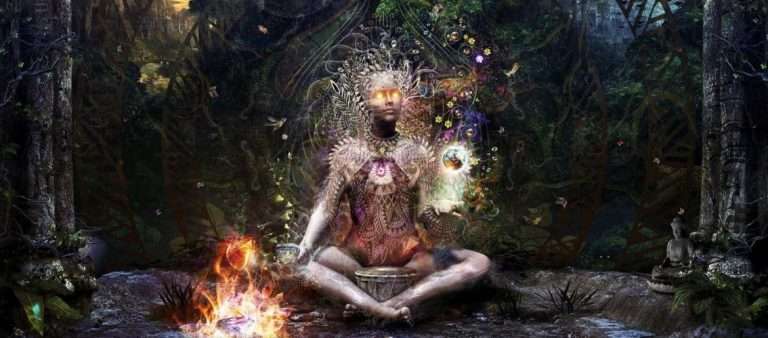
Samantha Retrosi is on the show to talk to us about healing with ayahuasca –what that means, how it happens – and the importance of understanding that healing and illness go well beyond the individual and extend into relationships, society, and politics.
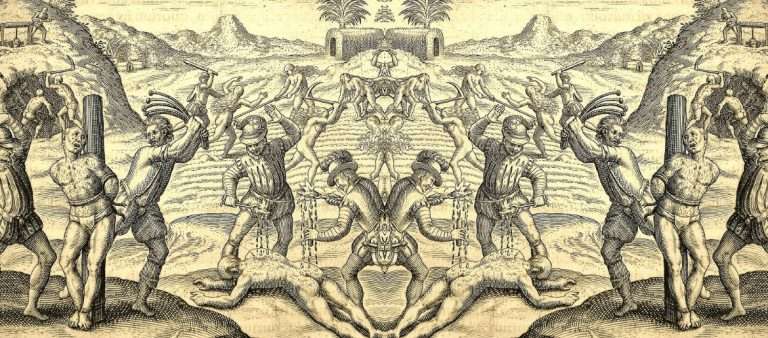
Kevin Tucker is on the show to talk to us about the history of resource extraction from the Amazon, the devastation it wrecked on the indigenous people of the Amazon, and how he sees that history of extraction alive in the present in the form of the spiritual extractivism around ayahuasca, with the murder of Arévalo as an example.
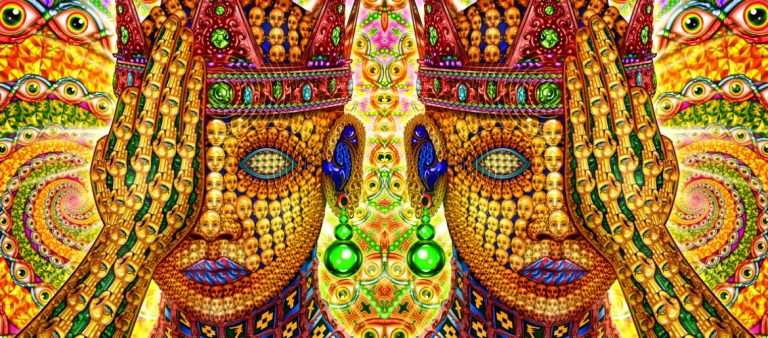
Salvia, apparently, is an underexplored wonder plant that has not only been misused and misappropriated but highly misunderstood. Thankfully, we have the knowledgeable and experienced contributions of Christopher Solomon to help us cast out those misunderstandings and enter us into the beautiful world Salvia Divinorum has to offer.

Deb Dana, LSCW is on the show to tell us all about Polyvagal theory and the explanatory power it has for how and why we are the way we are in the world and with each other in a psychological, neurobiological, sociological, but also practical way. Polyvagal theory is easily one of the most valuable things I have learned about in my life and I am very excited to share it with you.

Dr. Robin Carhart-Harris heads the Psychedelic Research Group within the Centre for Psychiatry at Imperial College London. He joins us on Adventures Through The Mind to talk about the Entropic Brain (and mind) theory, complexity vs. order, the disproportionate representation of ‘ego’ consciousness in modern civilisation and its impacts on the natural world, confirmation biases and misreporting in psychedelic science and, of course, how psychedelics work in the brain.

Tom and Sheri Eckert join us to talk about their initiative to legalize Psilocybin services in Oregon (#PSI2020).

In this (on-location) interview, Darren Springer talks about the ancient history of pan-African psychedelic use and travels forwards through time along the wings of mythology until the myths dissolve into the harsh reality of slavery, racism, and neighbourhoods infused with violence. It is grounded in this reality that Darren shares with us the potential of psychedelics (psilocybin mushrooms in particular) for the healing of historical trauma and the revitalization of black communities in the UK.

This is a transcript of the interview featured in episode 90 of Adventures Through The Mind podcast.

This is an episode for anyone interested in psychedelic psychotherapy be it as a current or future provider or someone who is seeking it for their own health and healing.

Tom Hatsis believes that in the psychedelic renaissance we must separate the modern lore from authentic history, a task he takes up by dismantling the tired and inept “holy mushroom hypothesis” in articles, videos, books, and this podcast, with a particular focus on Santa Clause, Christian Drug Taking, Jesus, and the real history of Christmas.

Erik Davis, writer and host of Expanding Mind podcast, joins us on the show to share what he sees are the essential skills we need to navigate the chaos of a reality liquified.